
Start with the life you want to build.
Start with the place you want to call home.
Explore the property, household, and cost considerations that matter for USDA financing.
A large down payment is one of the most common barriers to buying a home. Several programs exist to address that, and one of the less-discussed options is the USDA Single Family Housing Guaranteed Loan Program — which may allow eligible borrowers to finance a qualifying home with no required down payment.
What Is a USDA Home Loan?
The U.S. Department of Agriculture administers the program but does not typically lend money directly under the Guaranteed Loan Program. The structure works much like VA or FHA financing: approved private lenders — banks, credit unions, and mortgage companies — provide the funds, while the USDA guarantee reduces the lender’s exposure if a borrower defaults.
That guarantee is what makes the program’s terms possible. Because the government absorbs part of the risk, lenders may be able to offer financing with little or no down payment to borrowers who meet the requirements.
Who the Program Is For
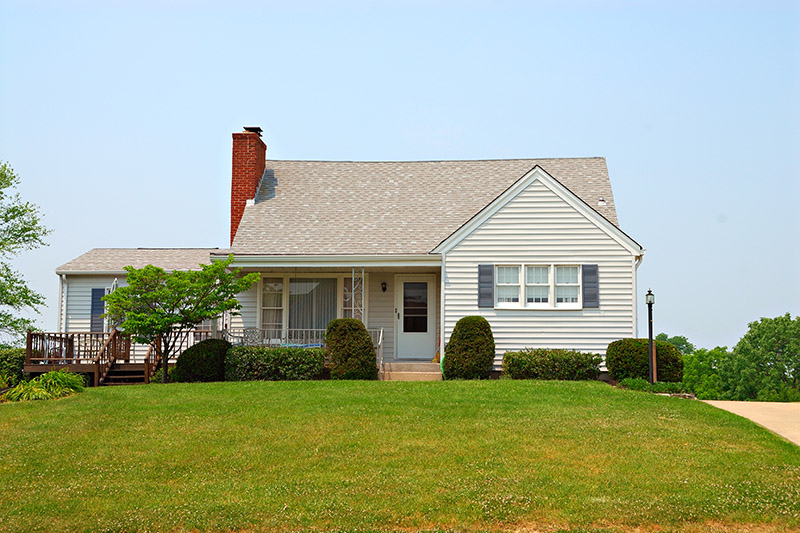
Despite the name, this isn’t a farm loan. USDA financing is not restricted to agricultural property and has nothing to do with farming. The program exists to help low- and moderate-income households purchase modest, safe, and sanitary housing as a primary residence in eligible rural areas.
“Rural” is also broader than most people expect. Many small towns and outlying suburban areas fall within eligible boundaries — properties that are a reasonable commute from mid-sized cities frequently qualify. USDA maintains an eligibility map where you can check a specific address, and eligible area designations are reviewed periodically, so a location’s status can change over time.
Key Requirements
Property Eligibility
The home must be located within a USDA-designated eligible area and must serve as your primary residence. Second homes and investment properties are not eligible. The property also must meet program condition standards, and an appraisal will assess whether it does. Depending on program guidelines, USDA financing may be available for new construction, existing homes, and certain properties requiring eligible repairs.
Income Limits
This is the requirement that surprises people most often, because it works in the opposite direction from what borrowers expect. USDA sets maximum household income limits — earning too much can make you ineligible. Limits vary by county and household size and are updated periodically.
Two details worth knowing: the calculation generally considers income from all adult household members, not only those on the loan application, and certain deductions may apply that reduce the qualifying figure. Because of this, borrowers who assume they earn too much sometimes turn out to be within limits once the calculation is done properly.
Credit and Debt
USDA does not publish a single universal credit score minimum, and eligible borrowers with less-than-perfect credit may still be considered. Lenders apply their own standards on top of USDA guidelines, so requirements vary from one lender to another. What generally matters is a demonstrated history of managing obligations, along with stable, verifiable income sufficient to support the payment.
Guarantee and Annual Fees
USDA loans do not carry traditional monthly private mortgage insurance. Instead, the program uses two fees: an upfront guarantee fee, which may be financed into the loan amount, and an annual fee collected in monthly installments. These fund the guarantee that makes the program work.
This structure is one reason borrowers compare USDA against FHA financing. The costs are set up differently, and which program produces a better overall picture depends on the specific numbers and circumstances.
Other Program Features
- The USDA Single Family Housing Guaranteed Loan Program uses fixed-rate financing; adjustable-rate loans are not offered under this program.
- USDA loans generally do not include prepayment penalties, so additional principal payments or early payoff are typically permitted under the terms of the loan.
- Refinance options may be available to eligible borrowers with existing USDA loans, subject to current program requirements and lender guidelines.
- USDA program requirements apply, and participating lenders may have additional qualification requirements.
Is It Worth Looking Into?
USDA financing may be worth considering if you’re open to buying outside a major metro area, your household income falls within program limits, and a down payment is the main obstacle in your way. It’s a poorer fit for buyers committed to a specific urban location or whose income exceeds the applicable limits.
All financing is subject to underwriting, income and asset verification, property and area eligibility, and applicable USDA and lender guidelines. Eligibility depends on borrower qualifications and cannot be determined in advance.
Have a property in mind or want to know whether your area qualifies? Give us a call — we’re happy to check eligibility and discuss whether a USDA loan may be appropriate for your situation.
This page explains general loan concepts for educational purposes only. It is not a personalized recommendation or an offer of specific rates, payments, or loan terms. Examples describe how financing can work; actual program availability, costs, and requirements must be confirmed with the lender. This is not a commitment to lend or extend credit. Information and/or dates are subject to change without notice. All loans are subject to credit approval. Other restrictions may apply. Not affiliated with or endorsed by HUD/FHA, the VA, USDA, or any government agency.
01 The home price
Try a purchase range that reflects the area you are considering.
02 Upfront expenses
Discuss the funds needed to complete your purchase.
03 Ongoing costs
Account for property taxes, insurance, and other housing expenses.
Program requirements vary. A conversation is not a commitment to lend or a loan approval.